How to Choose the Right HVAC Contractor for Your Home
Hiring an HVAC contractor is one of those decisions that only looks simple from a distance. Up close, it is dozens of judgment calls stitched together. You weigh comfort against cost, speed against care, and promises against proof. Most homeowners only make a few big HVAC decisions over a decade, yet those choices determine whether your system runs quietly and efficiently, or chews through energy and struggles on the hottest week of the year.
The best contractors bring a methodical approach you can see in their work order, their questions at the house, and their documentation. If you know what to look for, you can spot professionals without leaning on slick ads or the lowest quote. Here is how to evaluate an HVAC contractor with the same lens technicians use when they size equipment, plan an air conditioning installation, or diagnose a stubborn comfort problem.
Why the right partner matters more than the brand on the box
Equipment today is remarkably capable. A midrange heat pump or air conditioner can deliver excellent performance if it is sized, installed, and commissioned correctly. Where projects fail is not usually the product, it is the process. I have seen brand new units short cycle because the duct design ignored static pressure, attic units dripping due to a missed trap detail, and oversized furnaces that roast a hallway while leaving bedrooms chilly.
A good HVAC contractor reduces risk by front-loading thinking. Before a single tool comes out of the truck, they clarify the scope, confirm the load, and plan the path for refrigerant lines, condensate, fresh air, and electrical. When that planning is missing, you often see callbacks for AC repair within the first season, or a hasty heating repair every winter until someone finally addresses the root cause. The right partner saves you time, money, and frustration by preventing issues rather than reacting to them.
What “qualified” really means in HVAC work
Licensing and insurance are table stakes. A qualified contractor also has field habits that protect the home and the system. On a replacement job, ask how they calculate capacity. If you hear “We’ll match what’s there,” push for a real load calculation. Manual J for sizing, Manual S for equipment selection, and Manual D for ducts form the backbone of residential design. Without those, you are paying for guesswork.
Permits are another tell. A conscientious contractor pulls the permit in their name and welcomes inspections. It takes more time, but it means you have a third party verifying that clearances, combustion air, venting, condensate disposal, and electrical work meet code. This matters for both cooling and heating installation, especially with fuel-fired furnaces where improper venting or gas sizing can create safety hazards.
Finally, look for a commissioning process. On cooling systems, that includes nitrogen pressure testing the lines, evacuating to 500 microns or better, weighing in charge if required, and verifying superheat or subcool targets. On heat pumps, it includes confirming defrost settings and balance points. On furnaces, it includes clocking the gas meter when applicable, setting manifold pressure, and checking temperature rise. These are not extras, they are how durable systems are made.
Documents worth checking before you sign
Most homeowners do not need to become experts in airflow math to make a smart choice. You can learn plenty from a contractor’s paperwork and how they respond to a few direct questions.
- Proof of license and current liability and workers’ comp insurance
- Confirmation the contractor will secure required permits and schedule inspections
- A written scope with model numbers, line items, and duct modifications if any
- At least two recent references for similar AC replacement or heating replacement
- Documentation of manufacturer and trade certifications relevant to your system
These are quick filters. If the license is hard to produce, or the quote is a single line with a price and no detail, that is not a small oversight. It speaks to how the work will go when a surprise appears on installation day.
Building comparable estimates that actually compare
Bids are only useful if they are apples to apples. You can make that happen by steering the conversation to specifics and asking each contractor to price the same assumptions.
- Provide the same description of your home, comfort issues, and priorities to all bidders
- Request a load calculation summary and the proposed tonnage or BTUs
- Ask for model numbers, efficiency ratings, and whether duct changes are included
- Clarify line set replacement, drain design, thermostat type, and electrical work
- Ensure labor and manufacturer warranties are spelled out in writing
With these items aligned, you will see the differences that matter instead of being distracted by cosmetic add-ons. The low bid that omits duct repairs or permits is not a bargain if the house never cools evenly.
The details that separate a solid air conditioning installation
Cooling systems reward careful technicians. heating maintenance On air conditioning installation and air conditioning replacement, one of the most revealing steps is brazing with nitrogen to prevent internal oxidation. It is a small decision that keeps flakes of scale out of metering devices and lengthens compressor life. Evacuating to a deep vacuum, then watching for rebound, is another.
The line set deserves attention too. Reusing an old line set can be acceptable if it is the correct size, clean, and pressure tested, but a kinked or undersized line is a silent efficiency killer. Routing should respect serviceability. A clean path with proper supports and UV protection is not just pretty, it remains leak free longer and is easier to troubleshoot if you ever need AC repair.
Electrical and controls matter as well. That means a properly sized disconnect, grounded and bonded, and a thermostat that suits the system’s capabilities. Variable speed equipment wants a compatible control to manage dehumidification and staging. An inexpensive thermostat might run, but it may leave comfort on the table and complicate AC maintenance.
What to ask about AC maintenance and AC repair experience
Your relationship with a contractor outlives installation. A team that handles AC maintenance in a seasonal rhythm tends to spot wear before it escalates. When I review maintenance logs, I look for trends rather than one-off notes. Is the run capacitor drifting every summer? That signals excessive heat or voltage issues. Are condensate lines clogging twice a year? Time to discuss cleaning access and slope.
For AC repair, ask how they diagnose rather than which parts they replace most often. A tech who starts with system pressures, ambient conditions, delta T, and electrical readings will solve problems faster than someone swapping components until the noise stops. This pattern of thinking is what you are trying to hire.
Heating installation, service, and the safety layer
Heat adds consequences. With furnaces, correct venting, gas pressure, and combustion analysis are non-negotiable. Good heating installation practice includes sealed return plenums to avoid backdrafting, verified clearances to combustibles, and attention to condensate neutralizers on high-efficiency units. If a contractor does not own a combustion analyzer, they are guessing at safety and efficiency.
On heat pumps and hybrid systems, heating maintenance overlaps with cooling, but the cold-weather performance hinges on balance points, auxiliary heat staging, and outdoor sensor placement. Ask for a written explanation of how the system decides when to bring on strip heat or a furnace, and how the thermostat manages it. Clear logic equals predictable bills and comfort.
For heating repair, transparency is everything. Replacing an inducer motor is straightforward. Replacing multiple boards in a hunting expedition is not. When contractors share actual readings and tie them to manufacturer specs, you are looking at a disciplined approach rather than parts roulette.
When HVAC replacement makes more sense than repair
There is a fence line where repair is rational and a point beyond which HVAC replacement is the honest answer. For air conditioners, the trigger is often a major component failure on a system beyond its economic life, typically 12 to 15 years. If the refrigerant is an older blend that is costly to source and the coil is leaking, replacement beats pouring money into a system with dwindling support.
For furnaces, repeated heat exchanger warnings, severe corrosion, or multiple safety trips are strong signs the clock has run. You also weigh efficiency. Jumping from an older single-stage furnace to a modern variable speed unit may reduce noise and improve comfort, not just fuel use. Good contractors will show the math in ranges and admit the gray areas. Comfort complaints unrelated to the box, like duct imbalances, should be addressed in the same plan rather than hoping a new unit masks them.
Residential versus commercial HVAC, and why it matters to you
Commercial HVAC is a different sport. Roof curb work, economizers, building controls, and ventilation codes shape how technicians think. Contractors who do both residential and commercial HVAC often bring a systems mindset to homes. They look at ventilation rates, filtration levels, and set points instead of treating equipment as isolated. You do not need a contractor to be commercial to be good in a home, but if they speak fluently about airflow and controls, that is a green flag.
Ductwork, airflow, and the quiet metric that predicts comfort
If your last contractor never measured static pressure, you probably left performance on the table. Static pressure is the blood pressure of your duct system. Too high, and motors work harder, noise rises, and efficiency drops. Too low, and airflow starves coils and heat exchangers. Before an air conditioning replacement or heating replacement, a smart contractor will measure supply and return static and compare it to the equipment’s rated external static pressure.
Duct leakage is the partner issue. Leaky returns pull attic or crawlspace air into the system, adding dust and load. Leaky supplies waste conditioned air where you do not live. Sealing with mastic, improving returns in closed-off bedrooms, or resizing a few runs makes the whole house feel different. This is why you want a contractor who talks about ducts without being asked.
How Southern HVAC LLC evaluates the work behind the quote
Southern HVAC LLC has learned to read jobs backward from the failure points. Even when a project looks simple, our teams look at the parts of the system that usually cause callbacks. On cooling replacements, that means paying attention to how the air handler sits on the platform, how the drain trap is built to prevent air pull, and whether the filter rack seals tightly enough to stop bypass. On heating service visits, we look for the small signs of neglect that precede bigger issues, like scorch marks near rollouts or oxidation near burners.
That mindset shapes how we scope work and write proposals. Rather than tossing out a single price for a two-ton or three-ton unit, we include the duct adjustments and controls we believe are necessary to match the equipment. Some homeowners choose to defer certain upgrades, but at least the path is visible. It is easier to live with a staged plan than to be surprised later by a comfort problem you thought a new unit would solve.
The Southern HVAC LLC installation playbook, from driveway to startup
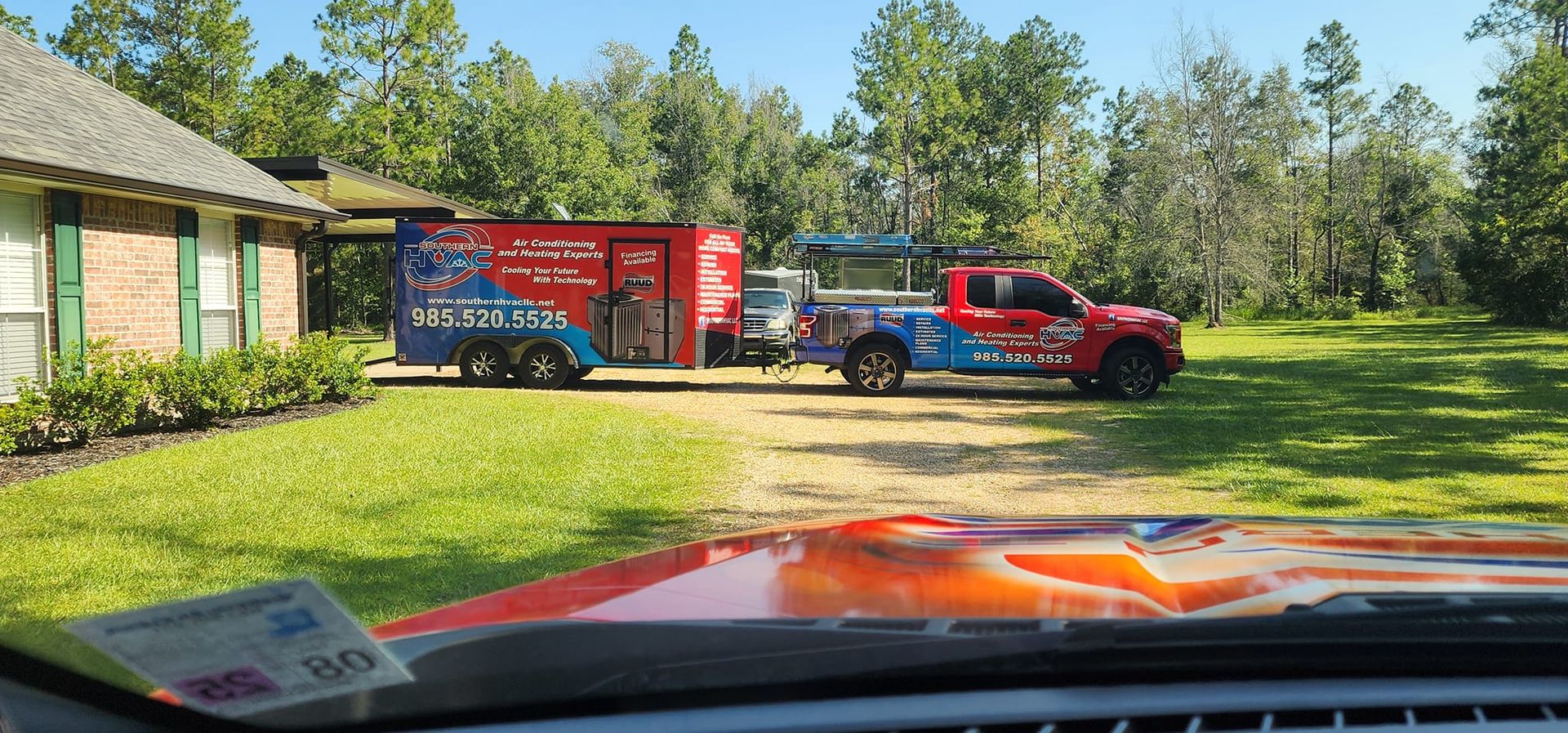
An installation day should feel organized. The trucks arrive where they will not block neighbors. Floors and stairs get protected. Power is verified off before panels are opened. Old refrigerant is recovered properly and recorded. When brazing, the lines are purged with nitrogen, then pressure tested and evacuated before any refrigerant moves. The new condenser sits on a level pad with proper clearances, and the air handler or furnace is shimmed so the drain line has slope. Simple, consistent steps like these are what reduce repeats on AC repair and heating repair.
Startup is not a switch flip. We confirm airflow settings, especially on variable speed blowers, then run the system long enough to check coil temperatures and pressures under steady conditions. Thermostats are programmed to suit the equipment, not just the homeowner’s schedule. Before we leave, we write down final readings and leave a copy with the homeowner. Six months later, when we return for AC maintenance or heating maintenance, we can compare notes. Trends tell the truth.
Maintenance agreements that actually maintain
A maintenance plan should track the parts that drift or wear, not just rinse a coil and change a filter. On cooling systems, that means checking fan amperage, capacitor values, contactor condition, coil cleanliness, drain performance, and verifying charge indirectly by temperatures and pressures. On furnaces, it means measuring temperature rise, inspecting burners and flame, testing safety switches, and checking venting. If your plan does not include real measurements, it is a reminder service, not maintenance.
The benefit of this kind of heating service and AC service is predictability. Small parts often telegraph their failure. A capacitor that measures 7 percent low today is usually a failure waiting to happen on the first 98-degree day. Swapping it on your schedule beats a no-cool call with a house full of guests.
Warranties, fine print, and what they reveal about the contractor
Manufacturer warranties cover parts for a set number of years if you register the product. Labor is separate and is where contractors make different choices. Some include a year of labor on installs and offer extended options. Others boom and bust, swapping names and leaving homeowners with paper that no one will honor.
Look for specificity. A good contractor’s warranty will state how they handle refrigerant leaks, who covers crane costs if a rooftop unit must be accessed, and what counts as maintenance to keep the warranty valid. For air conditioning installation, line set leaks in walls are a notorious gray area. Clarify how those are handled. In heating installation, heat exchanger coverage is often long, but labor to access it is not. Reading these lines now prevents frustration later.
Communication, scheduling, and the house rules that earn trust
Technical skill matters, but people live with process. Do technicians call ahead if they are running late, and do they actually leave rooms cleaner than they found them? Do they wear shoe covers in carpeted rooms? On multi-day jobs, is there a daily summary and a plan for the next day that respects how you live in the home?
At Southern HVAC LLC, we learned this the hard way on a historic house where narrow stairs made equipment movement slow. We mapped a different path through a rear porch and tarped everything within reach. The extra hour saved two walls from scuffs and kept the homeowner calm while we wrestled with a heavy air handler. Care like that does not appear in a quote, but you feel it when things get tricky.
How to weigh experience against innovation
HVAC changes rapidly, especially with heat pump technology and refrigerant transitions. A contractor does not need to chase every shiny thing, but they should be comfortable with today’s standards. Ask what they think about variable capacity systems in your climate, and how they approach ventilation now that homes are tighter. If the answer feels dated, ask for a second opinion.
The opposite extreme is a contractor who upgrades everything by default. Variable speed can be wonderful, but only if the duct system supports it. Otherwise you risk noise, short cycling, or a system that never reaches the conditions where it saves energy. Good judgment lies in the middle, matching technology to the house, the occupants, and the budget.
Red flags that signal future headaches
A few patterns nearly always lead to problems. Be cautious if a contractor:
- Refuses to perform or share a load calculation and duct assessment on replacements
- Quotes a single size for every house in the neighborhood without a site check
- Avoids permits or suggests you pull an owner permit to “save time”
- Can’t articulate their commissioning steps or provide startup readings
- Uses only verbal estimates with no model numbers or scope detail
These are not quirks. They are indicators of how the install will proceed and how support will look when temperatures spike.
Budget, value, and the cost of skipping steps
Price matters, and HVAC projects are significant. Still, when a quote is far below the pack, ask where the savings come from. Sometimes it is a genuine efficiency in scheduling or supplier relationships. More often, it is fewer steps. Skipping a new drain pan, reusing a clogged line set, or ignoring a return duct issue saves a few hours now and costs you years of noisy, uneven comfort.
Value is not spending the most. It is paying for the steps that matter in your situation. A tight, single-story home with accessible ducts may not need extensive modifications to benefit from air conditioning replacement. An older two-story with hot bedrooms probably does. The better the contractor’s questions, the better their fit to your home.
What to expect after the system is running
Commissioning is not the last word. Pay attention over the first weeks. Are there rooms that still lag? Does the thermostat overshoot in the evening? Share those observations during the first check. Small tweaks to blower speeds, static pressure, or thermostat programming can make a measurable difference.
Keep filters on a schedule, and do not treat maintenance as optional. Heating maintenance before the first cold snap and AC maintenance before the first heat wave are basic. If the contractor who installed your system offers a maintenance plan, read it for substance, not just reminders. You want measurements and trend tracking, not a rinse and run.
Final thoughts from the field
Choosing an HVAC contractor is about pattern recognition. Professionals leave fingerprints in their questions, their measurements, and their documentation. They talk about airflow as much as equipment, welcome third-party inspections, and treat your home like a jobsite that deserves planning and protection. Companies like Southern HVAC LLC build their reputation on repeatable processes, not one-time heroics. Whether you hire a large firm or a small shop, look for that structure behind the smile.
If you keep the focus on process quality, clarity in scope, and the discipline of commissioning and maintenance, your next AC repair will likely be routine or preventable, your heating service will feel predictable, and your comfort will match what the brochure promised. That is how you know you chose well.
Southern HVAC LLC
44558 S Airport Rd Suite J, Hammond, LA 70401, United States
(985) 520-5525